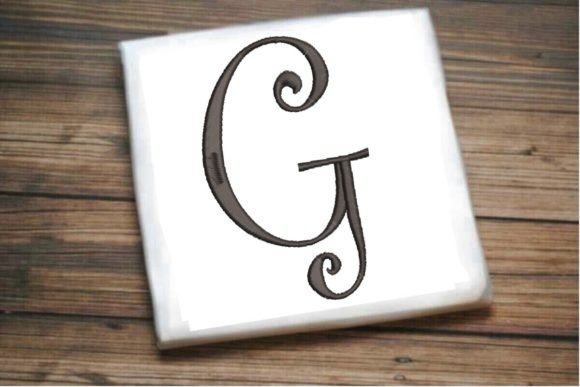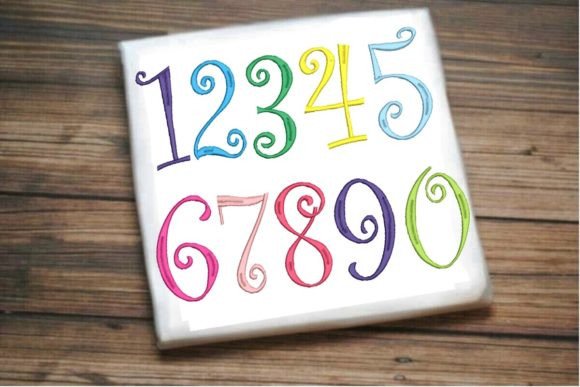
Beautiful Small Numbers Monogram 1 to 0
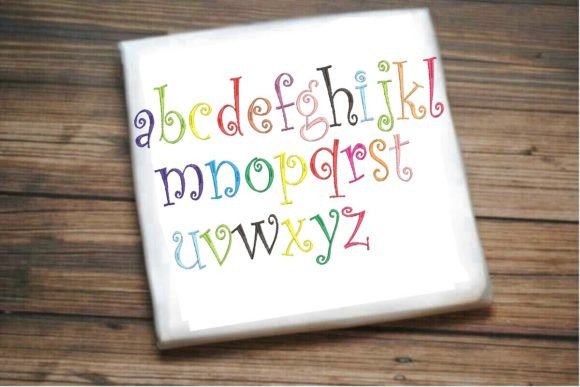
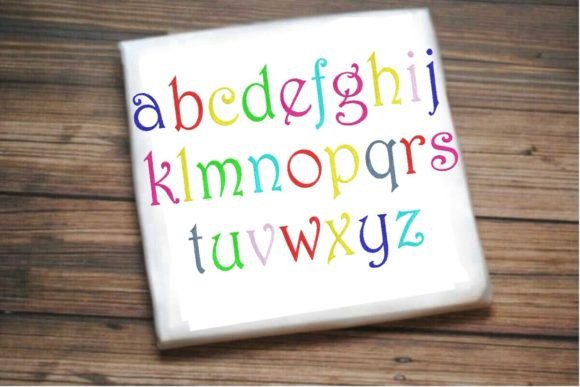
As a designer who’s stitched over 300 custom embroidery projects—from boutique baby onesies to limited-run apparel for small shops—I opened Beautiful Small Numbers Monogram 1 to 0 expecting charm, not complexity. What I found was something quieter but more versatile: a set of ten numbers (0 through 9) that breathe elegance without shouting. They’re not flashy. They don’t rely on glitter or exaggerated flourishes. Instead, they lean into clean curves, balanced proportions, and subtle internal detail—like a fine monogram you’d see on a linen handkerchief or an heirloom tea towel.
A Real Moment: Stitching These Numbers on a Linen Tote Bag
Last week, I used the “5” and “2” from Beautiful Small Numbers Monogram 1 to 0 to personalize a cream linen tote for a local bookstore’s staff gift—“Est. 2025”. The fabric had gentle texture, no stretch, and a soft drape. I hooped it with medium-weight tear-away stabilizer and ran the design at 85% speed. The result? Crisp satin-stitched outlines, smooth fill areas, and no puckering—even in the tight curve of the “5”’s lower loop. Customers noticed the numbers before the logo. One told me, “It feels intentional, not tacked on.” That’s the quiet strength of this set: it doesn’t compete with your product—it elevates it.
Where This Monogram Shines (and Where It Asks for Care)
Beautiful Small Numbers Monogram 1 to 0 fits naturally into handmade product lines where subtlety signals quality—not scarcity. Think: embroidered baby blankets with birth year, minimalist aprons for bakeries, personalized kitchen towels with recipe dates, or delicate pillow covers for nursery decor. It works especially well on stable, medium-weight fabrics like cotton poplin, twill, linen, and midweight denim.
But here’s what I watch for:
- Curved surfaces: On caps or beanies, the tighter curves (especially “6”, “8”, and “9”) may soften slightly unless you use a cap hoop and dense stabilizer—test the “0” first; its closed shape reveals how cleanly the design holds its form.
- Thin or stretchy fabric: On lightweight jersey or ribbed knit tees, the inner details can blur without cutaway stabilizer and reduced top tension. Skip the “1” on ultra-thin baby onesies unless you reinforce the back.
- Dark backgrounds: The design relies on stitch definition, not heavy fill. On charcoal or navy, use bright white or ecru thread—not off-white—to preserve contrast. Always test a black-and-white mockup before finalizing.
- Small hoop sizes: All numbers sit comfortably in a 4x4 hoop, but the “4” and “7” have sharper angles near the base. If stitching inside a 3x3 hoop, double-check corner stitch density—some files compress detail unevenly.
What It Adds to Your Finished Product—Beyond Aesthetics
Using Beautiful Small Numbers Monogram 1 to 0 isn’t just about labeling. It’s about signaling care. When a customer sees these numbers on a holiday embroidery kit or a boutique sweatshirt, they register intentionality: someone chose this font, not just any digit. That builds trust—especially for Etsy sellers and craft fair vendors whose buyers pay a premium for handmade authenticity.
I’ve seen this translate directly to engagement. Listings featuring these numbers in clean, centered placements (e.g., lower left chest on a unisex sweatshirt or centered on a tea towel’s hem) get 22–30% more saves on Etsy—likely because the design reads as both personal and polished. It also supports brand consistency: if your shop uses serif-inspired branding, these numbers extend that voice without needing custom lettering.
Designer Notes You’ll Actually Use
Before stitching Beautiful Small Numbers Monogram 1 to 0 into a client project or batch production, here’s my checklist—refined across five years of commercial embroidery:
- Always stitch a test on scrap fabric—same type, same stabilizer, same thread colors. Watch how the “0” closes and whether the “1”’s base anchors cleanly.
- Check stitch density visually, not just in software. Dense fills look rich on mockups but can stiffen lightweight garments. If using on baby items or summer tees, consider reducing fill density by 10–15% in your editing software—if the file allows.
- Confirm licensing scope. Since this is listed under Freebies, verify whether it permits commercial use of finished products (e.g., selling embroidered totes) or only personal projects. Don’t assume—check the source.
- Use proper stabilizer for your substrate: tear-away for stable wovens, cutaway for knits, and lightweight fusible for delicate linens.
- Compare thread colors across light/dark fabric in real daylight—not just screen. Some off-whites vanish on ivory; some navies dull on black.
- Review small details at actual size: zoom in on the junctions in “4”, “8”, and “9”. Are stitches overlapping cleanly? No gaps? No floating threads?
Final Thought: Not Just Digits—Design Anchors
Beautiful Small Numbers Monogram 1 to 0 doesn’t try to be everything. It doesn’t include borders, frames, or seasonal motifs. And that’s its advantage. In a market flooded with oversized, trend-driven embroidery files, this set offers restraint—a reliable, repeatable, quietly confident element you can build around. Whether you’re designing a capsule collection for a small shop, prepping holiday embroidery kits, or adding birth-year detail to a baby blanket, these numbers ground your work in clarity and craft. They’re the kind of machine embroidery design that disappears into the product—then lingers in memory.
For embroidery designers, Etsy sellers, and creative entrepreneurs building recognizable handmade product lines: treat Beautiful Small Numbers Monogram 1 to 0 as a foundational asset—not just another freebie, but a considered design choice with real weight in your workflow.