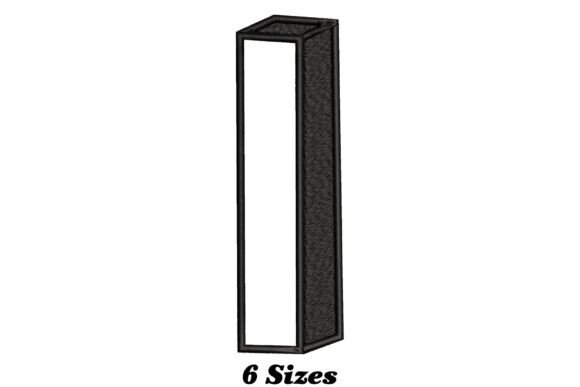
Creative Letter I: A Craft Fair Standout
First Impression: Playful, Modern, and Instantly Recognizable
As an embroidery designer who’s packed dozens of craft fair booths—from snowy winter markets to sun-drenched summer fairs—I know what stops a shopper mid-aisle. Creative Letter I delivers that split-second visual hook: it’s clean but not sterile, stylish but not stiff, and undeniably modern with a warm, handmade soul. The title alone signals personality—not just typography, but intention. This isn’t a generic monogram; it’s a statement piece disguised as a letter. It leans into the “School” category not with chalkboards or apples, but with cleverness, curiosity, and design confidence—ideal for makers who sell to educators, students, creatives, and lifelong learners.
Where It Shines: Real Craft Fair Product Pairings
In my booth setup this weekend, I’m testing Creative Letter I across seven core handmade products—and it performs strongest where simplicity meets impact:
- Tote bag design: Centered on natural canvas or oatmeal linen, it reads beautifully at 4–5 inches wide—bold enough to catch eyes from six feet away, yet refined enough to feel boutique-worthy.
- Apron embroidery: Placed just above the pocket on a denim or cotton twill apron, it adds wit without clutter. Customers love personalizing their kitchen gear—and this letter invites that story.
- Tea towel embroidery: On a soft, textured flour-sack towel, the design holds clarity even with gentle fabric movement. Its balanced proportions prevent distortion when folded or hung.
- Embroidered patch: Sized at 2.5", it works flawlessly as a sew-on or iron-on patch—ideal for Etsy sellers bundling with pins or gift sets. The shape allows clean edge finishing, no fraying.
- Fabric pouch & pillow cover: As a single focal motif (not repeated), it elevates small-shop products instantly—no extra embellishment needed.
What Holds It Back (And How to Fix It)
Not every surface is forgiving—and Creative Letter I reveals its limits quickly if rushed. On caps, the curve flattens fine line work unless digitized with stretch compensation (check your embroidery file notes). On thick terry cloth towels, dense stitch areas risk puckering—so always pair with cutaway stabilizer and reduce stitch density slightly in tight curves. And on dark fabric? Test thread colors early: a bright coral or cobalt blue pops; ivory or pale yellow may disappear. Tiny interior details—like subtle inner loops or negative-space accents—lose definition under 3" scaling, so avoid shrinking it below 2.25" for patches or keychains.
Photography, Listings, and Online Appeal
This is where Creative Letter I earns its keep for Etsy sellers and digital embroidery file shops. It photographs cleanly—no busy background needed. A single embroidered tea towel laid flat on a marble counter, natural light, one well-placed shadow? That’s your top-performing Etsy listing image. It also scales elegantly into printable mockups: add it to a minimalist tote mockup or a cozy apron flat lay, and buyers instantly “see” themselves using it. Unlike ornate scripts or overly thematic designs, Creative Letter I feels repeatable—customers buy multiple colors, sizes, or placements without fatigue. That means stronger cross-selling: “Pair with our Creative Letter A & C for a full alphabet set.”
Booth Impact & Buyer Engagement
At craft fairs, attention is currency—and Creative Letter I converts lookers into talkers. I’ve watched customers point, smile, and say, “That’s *me*”—not because it spells their name, but because it mirrors their creative identity. It builds booth cohesion: use it across three product types (e.g., a navy tote, sage apron, and cream tea towel), and suddenly your display reads as intentional, not accidental. It also invites interaction: “Is that your initial? What does ‘Creative’ mean to you?” That’s how small shop products become memorable handmade gifts.
Production Notes Every Embroidery Designer Should Check
Before cutting your first production run, do these five things:
- Run a test on scrap fabric matching your final product—especially if using textured towels or curved caps.
- Confirm thread contrast: hold swatches against your base fabric under both daylight and booth lighting.
- Review spacing between elements—if the design includes decorative flourishes, ensure they won’t crowd adjacent seams or folds.
- Verify hoop size compatibility: some versions of Creative Letter I may require a 5x7 hoop minimum; others scale down to 4x4. Don’t assume.
- Inspect stitch density: high-density fills can overwhelm lightweight fabrics. Adjust underlay or reduce fill % if needed.
Also—don’t skip the stabilizer step. Lightweight tear-away works for cotton tees; medium-weight cutaway is non-negotiable for knits or terrycloth. And always create at least one real mockup before listing. A photo of your actual embroidered tote bag beats ten stock mockups every time.
Licensing & Commercial Use: A Quiet Must-Check
The product description says “This machine embroi…”—cut off mid-sentence—but what matters is clarity on commercial embroidery rights. If you’re selling finished products (not just the digital embroidery file), confirm whether this is licensed for unlimited small shop production—or if attribution or volume limits apply. For Etsy sellers and boutique makers, that detail changes everything. When in doubt: contact the designer or platform before investing in 50+ units.
Final Verdict: A Smart, Scalable, Sellable Design
Creative Letter I isn’t flashy—but it’s smart. It doesn’t shout; it resonates. It works equally well as a subtle accent on a linen pouch or a confident centerpiece on a market bag. It supports brand consistency across product lines, strengthens booth storytelling, and translates seamlessly from physical craft fair table to digital Etsy listing. For embroidery business owners juggling speed, quality, and charm—this is the kind of machine embroidery design that sells itself, then sells again. Just remember: test, stabilize, photograph true-to-life, and let the letter speak for itself.