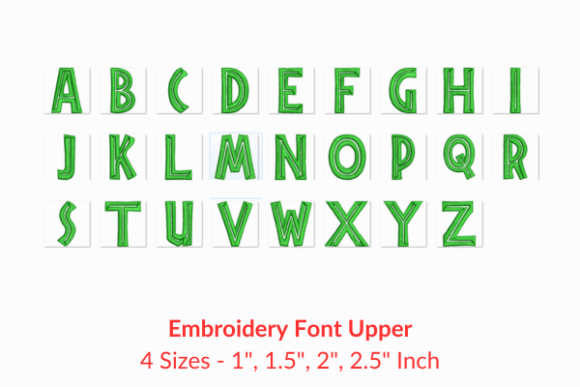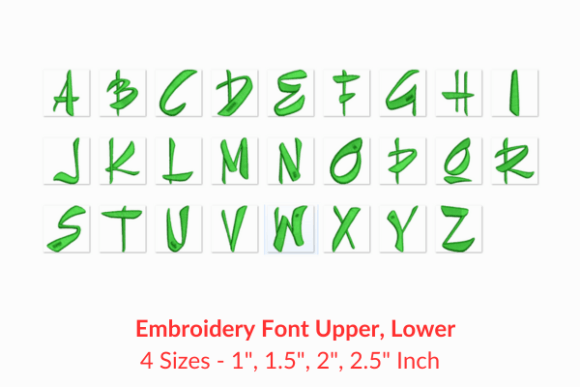
Goatskin Brush Fonts Embroidery Design
A Practical Review for Small Business Merch & Branded Patches
As an embroidery designer who’s digitized and stitched thousands of commercial projects—from café aprons to boutique tote bags—I approached the Goatskin Brush Fonts Embroidery Design with a clear question: Does this font deliver both personality *and* professionalism for real-world small business use? The answer is yes—but with thoughtful execution.
First Impression: Rustic Charm Meets Handmade Clarity
The name “Goatskin Brush Fonts” immediately signals texture, authenticity, and tactile warmth. This isn’t a sterile sans-serif or over-polished script—it’s a brush-style embroidery font that evokes hand-lettered signs, artisanal packaging, and local shop signage. Visually, it reads as friendly, grounded, and quietly confident—ideal for businesses rooted in craft: bakeries, florists, pet brands, creative studios, and independent schools. It avoids looking juvenile or overly decorative, striking a balance between approachable and premium. That duality makes it especially effective for embroidered patch applications where brand identity needs to feel human-scaled and intentional.
Where It Shines in Commercial Embroidery Projects
In practice, the Goatskin Brush Fonts Embroidery Design excels where character matters most:
- Branded patches for staff uniforms—stitched on denim aprons, canvas tote bags, or twill caps—carry instant visual cohesion without shouting.
- Chest logos and sleeve accents on work shirts or school-branded apparel gain warmth and distinction versus generic fonts.
- Product packaging accents, like embroidered tags on handmade soap bundles or botanical tea boxes, elevate perceived value through subtle, tactile typography.
- Custom apparel for local events (farmer’s markets, pop-ups, school fairs) feels cohesive and community-oriented—not mass-produced.
- Etsy sellers and crafters benefit from its versatility across digital embroidery file formats, enabling quick personalization of names, dates, or short quotes on customer orders.
Because it’s designed as a true machine embroidery font—not just a vector traced into stitches—it handles letter spacing, kerning, and stroke weight with intention. That means fewer manual edits before production, faster turnaround for custom apparel, and more reliable results across varied hoop sizes and fabric types.
Where to Use It With Intention
Like any expressive font, the Goatskin Brush Fonts Embroidery Design demands context-aware application. Avoid using it where legibility or durability is compromised:
- Under 0.75” height: Fine brush strokes lose definition at tiny patch sizes—test stitch-outs before committing to ½” cap fronts or mini iron-ons.
- Highly textured fabrics (like bouclé, heavy burlap, or looped terry) may obscure delicate outlines; pair with medium-weight cutaway stabilizer and reduce stitch density if needed.
- Dark uniforms or dense cotton blends: Ensure thread colors provide strong contrast—navy thread on black fabric won’t read well, even with bold letterforms.
- Frequently washed items (e.g., restaurant aprons, daycare staff shirts): Confirm stitch density supports longevity—overly dense fills can stiffen fabric and crack over time.
- Curved surfaces (like structured cap fronts): Test how the brush flow adapts to dome-shaped hooping—some flourishes may distort without proper underlay adjustment.
Impact on Brand Identity & Customer Perception
This font doesn’t just spell words—it reinforces brand voice. A florist using Goatskin Brush Fonts Embroidery Design on linen tote bags signals care, craftsmanship, and seasonal authenticity. A small school applying it to PE shirts or spirit wear adds warmth without sacrificing clarity. Customers subconsciously associate that handmade quality with trust and attention to detail—boosting perceived product value and encouraging repeat engagement.
Consistency is key: when used alongside other design assets (logos, packaging, social graphics), this font strengthens visual continuity. It bridges digital and physical branding seamlessly—whether featured in a printable mockup for client approval or stitched onto a finished product. For Etsy sellers, that cohesion builds buyer confidence; for brick-and-mortar shops, it deepens local recognition.
Practical Designer Notes Before You Stitch
Before launching into production, run these checks—especially for commercial embroidery:
- Test the Goatskin Brush Fonts Embroidery Design in black and white first—many nuances reveal themselves without color distraction.
- Verify legibility at your target patch size—print a 1:1 paper mockup and hold it at arm’s length.
- Review thread color contrast on your actual fabric swatch—not just on screen.
- Inspect letter spacing and baseline alignment, especially for multi-word phrases or names with varying character widths.
- Confirm compatible hoop size and digitizing compatibility with your embroidery software and machine.
- Stitch a sample on the exact fabric and stabilizer combination you’ll use—fabric texture dramatically affects brush stroke definition.
- Create a realistic printable mockup for client sign-off—avoid assumptions about how it will translate physically.
- Compare it beside your existing logo or icon set—does it harmonize, or compete?
- Double-check licensing terms—this is a digital embroidery file intended for commercial embroidery, but always confirm permissions for resale, distribution, or bundled product use.
Remember: the strength of the Goatskin Brush Fonts Embroidery Design lies not in its novelty, but in its reliability as a tool. It’s built for repetition—on 50 staff aprons, 200 tote bags, or hundreds of personalized gifts—and holds up because its construction respects the limits and opportunities of real-world stitching.
For small business owners, embroidery shops, and makers building recognizable, heartfelt brands, this font is more than decoration. It’s a quiet ambassador—stitched, trusted, and ready to represent what your business stands for.