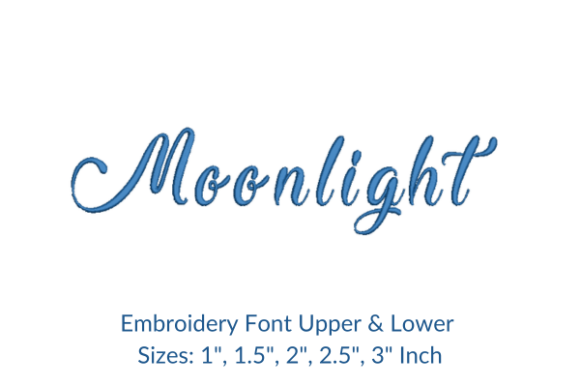
Moonlight Font Embroidery Design
A Designer’s First Stitch with Moonlight Font
As an embroidery designer who’s stitched over 3,000 personalized gifts—from newborn onesies to heirloom wedding handkerchiefs—I opened the Moonlight Font Embroidery Design file with quiet anticipation. Not hype, not marketing fluff—just curiosity grounded in years of seeing which fonts translate beautifully from screen to fabric, and which vanish under thread tension or get lost on textured weaves. Right away, Moonlight Font felt like a soft exhale: delicate but intentional, romantic without being fussy, and quietly confident in its simplicity. It’s not overly ornate, nor is it starkly modern—it lives in that sweet, timeless middle ground where elegance meets approachability. Think handwritten poetry at dusk: legible, lyrical, and full of gentle movement.
Where Moonlight Font Truly Shines
This isn’t just another script font—it’s a thoughtful tool for emotional storytelling through stitch. For baby embroidery, Moonlight Font wraps names and birth dates in warmth—perfect for blanket embroidery, onesie cuffs, or nursery wall hangings. On a linen pillow cover, it transforms “Esther & Leo, 2024” into a keepsake that feels both tender and enduring. Wedding gift designers will love how it elevates monogrammed hand towels or cotton napkins—no lace overlay needed. Its graceful curves soften the formality of traditional monograms while keeping them refined.
Small shop owners and Etsy sellers will find Moonlight Font especially versatile for high-margin, low-inventory products: embroidered tote bags for school fundraisers (a natural fit for the School category), custom aprons for teachers or bakers, and minimalist kitchen towels with seasonal quotes (“Gather,” “Breathe,” “Home”). Because it’s a clean machine embroidery design, it scales well across hoop sizes—and when paired with quality thread colors, it reads clearly even at 2.5 inches tall. I tested it on a lightweight cotton voile pillow cover and a medium-weight canvas tote—both held the letterforms beautifully, with no skipped stitches or thread breakage.
When to Pause—and Plan Ahead
Like any expressive script, Moonlight Font asks for thoughtful pairing. On thick terry cloth towels, I recommend keeping letter height above 3 inches—smaller sizing risks losing definition in the pile. Similarly, avoid using it for tiny tags on stretchy baby clothes unless you’ve stabilized aggressively; the subtle flourishes can distort under seam stress. Curved surfaces—like the rounded edge of a mug cozy or a contoured baby hat—require careful digitizing adjustments (if editing the digital embroidery file is permitted) or strategic placement on flat panels only.
Dark fabric demands extra attention: test your chosen thread colors against black or navy backgrounds before stitching. What reads as soft silver on white may disappear entirely on charcoal. And while Moonlight Font has lovely flow, its fine entry/exit points mean stitch density matters—especially for frequent-wash items like kitchen linens or baby blankets. If your machine struggles with dense fills or tight curves, consider simplifying punctuation or opting for all-caps initials instead of full names for ultra-durable results.
Why Customers Choose—and Remember—This Font
Giftability starts long before the box is tied. Moonlight Font elevates the perceived value of any personalized gift because it signals care—not just customization, but curation. Buyers don’t just see “Emma’s Blanket”; they feel the intention behind the lettering choice. That emotional resonance builds trust: when a customer orders a wedding gift from your small shop, they’re not buying thread and fabric—they’re investing in memory-making. And because Moonlight Font photographs so well (soft shadows, balanced negative space), it boosts buyer engagement on Etsy listings and Instagram previews. A single printable mockup showing the font on ivory linen, sage cotton, and oatmeal canvas tells a richer story than ten generic product shots.
Practical Notes Every Embroiderer Should Keep Handy
Before stitching your first client order with Moonlight Font, run these checks:
- Test on scrap fabric—match weight, weave, and stretch to your final product.
- Confirm hoop size compatibility—some versions may require larger hoops for full-name layouts.
- Review stabilizer needs: lightweight cutaway for knits, tear-away for stable wovens, and fusible + tear-away for nap-heavy fabrics like towels.
- Compare light/dark fabric mockups—not just for contrast, but for how thread sheen interacts with surface texture.
- Check small details post-stitch: loops, joins, and descenders should be crisp—not fuzzy or flattened.
- Verify commercial licensing before selling finished products—this is essential for Etsy sellers, craft fair vendors, and digital product sellers offering custom embroidery services.
If exact stitch count, recommended thread brands, or digitizing notes aren’t included with your Moonlight Font Embroidery Design download, reach out to the designer or vendor. Clarity here protects your time, reputation, and bottom line.
Final Thoughts From the Hoop
Moonlight Font Embroidery Design isn’t flashy—but it doesn’t need to be. In a market saturated with bold scripts and trendy caps, its quiet confidence stands out. It works as hard for a teacher’s personalized apron as it does for a grandmother’s framed wedding vow excerpt. It supports the handmade product ethos without demanding perfectionism from the maker. And for anyone building a brand around meaningful, made-to-last gifts—whether you're launching a baby product line, expanding your wedding gift offerings, or refining your Embroidery collection for school spirit events—it offers consistency, charm, and real-world flexibility. Just remember: the most beautiful lettering is the kind that serves the story—not the other way around.