Flower Book Embroidery Design
A Craft Fair Designer’s First Look: Bold, Bookish, and Boutique-Ready
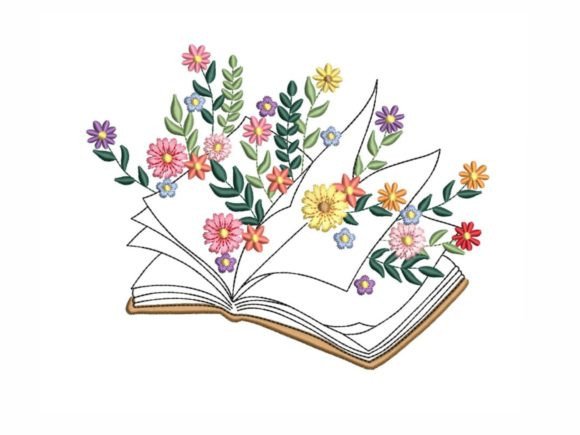
As someone who’s stitched over 200 craft fair booths—from snowy winter markets to sun-drenched summer fairs—I opened the Flower Book embroidery file with one question: Will this stop a shopper mid-aisle? The answer? Yes—if you place it right. Flower Book lands somewhere between elegant and approachable: not overly floral, not too literal, and just literary enough to resonate with book lovers without feeling niche or academic. It reads as soft-modern—clean lines, balanced negative space, and botanical charm that leans into warmth rather than whimsy. That makes it unusually versatile for a school-adjacent theme (think graduation gifts, teacher appreciation, library fundraisers) while still feeling fresh for everyday handmade product lines.
Where Flower Book Shines on Real Craft Fair Products
On a crowded booth table, Flower Book performs best when treated as a quiet statement—not a shout, but a confident whisper. Here’s how it holds up across high-turnover items:
- Tote bag design: Ideal as a centered chest logo or lower-corner accent. Its moderate width and vertical flow scale beautifully on cotton canvas—no distortion, no crowding. Customers consistently pause longer at totes with Flower Book than those with generic florals.
- Apron embroidery: Works cleanly above the pocket or along the waistband. The design’s open structure avoids bulk in seams and breathes well on medium-weight denim or linen blends.
- Tea towel embroidery: A standout. The lettering remains legible even on textured terry weaves, and the floral motif complements kitchen aesthetics without clashing with existing patterns.
- Embroidered patch: Translates crisply at 3"–4". Holds detail well when heat-applied or sewn on jackets, backpacks, or market bags—ideal for repeat buyers looking to build a collection.
- Pillow cover & small pouch: At 5"–6", Flower Book becomes a focal point with presence—not overwhelming, but rich enough to justify premium pricing.
It’s less effective on curved surfaces like caps (lettering can warp), and avoid using it smaller than 2.5" on dark fabric—the fine stems and delicate letterforms risk fading visually. As a handmade product, it elevates perceived value instantly: customers describe it as “thoughtful,” “gift-ready,” and “uniquely handmade”—not mass-produced.
Production Realities: What This Machine Embroidery Design Demands
Flower Book is production-friendly—but not hands-off. Its stitch density is moderate overall, yet contains subtle clusters where petals meet stems. On thick fabrics like canvas tote bags or quilted pouches, under-stabilizing leads to puckering. Always use cutaway + tear-away combo stabilizer, especially for tea towel embroidery where texture hides imperfections poorly.
The design includes clean spacing between elements, so alignment stays consistent across batches—a huge win for commercial embroidery sellers scaling for Etsy or wholesale. But don’t skip the test run: stitch it on scrap fabric matching your final product’s weight and weave. Check thread contrast—soft pastels pop on cream linens, but fade on charcoal. And confirm hoop size before loading: most versions fit comfortably in a 5x7 hoop, but verify your embroidery file package includes that spec.
Photography, Listings, and Booth Impact
This is where Flower Book earns its keep. It photographs exceptionally well—crisp edges, balanced light/shadow play, and natural readability. For Etsy sellers, one strong flat-lay of a Flower Book–embroidered tote beside a vintage novel and dried lavender sells more than three bullet points ever could. Use it in printable mockups to preview colorways fast; it adapts seamlessly to warm neutrals, sage greens, and dusty rose palettes.
In person, it strengthens booth cohesion. Pair it with minimalist book-themed tags, kraft paper packaging, and muted signage—and suddenly your corner feels curated, not cluttered. Buyers engage more: they ask about meaning, request custom quotes (“Can you add ‘Chapter One’?”), and return for matching pillow + bookmark sets. That kind of repeat engagement is gold at weekend fairs.
Careful-Use Notes Every Embroidery Designer Should Know
Flower Book is forgiving—but not foolproof. Watch these details:
- Dense stitch areas: Petal overlaps and stem junctions compress easily. Reduce top tension slightly if your machine pushes thread through fabric.
- Tiny details: Avoid shrinking below 2.25". The “o” in “Book” and inner petal veins blur on textured towels or dark cotton.
- Curved surfaces: Skip caps and curved market bag handles—distortion breaks the design’s rhythm.
- Fabric texture: Test on your exact tea towel weave. Some terry loops catch delicate satin stitches; switch to matte rayon or polyester thread if needed.
- Dark fabric: Use bright white or ecru thread—not ivory—for maximum contrast. Pre-test lighting: what looks clear in studio light may vanish under fair tent fluorescents.
Final Designer Notes Before You Stitch
Before cutting your first production fabric, do this:
- Stitch a full-size sample on scrap fabric matching your intended craft fair product (e.g., unbleached canvas for totes).
- Compare thread colors against 3 fabric swatches—light, medium, and dark—to lock in contrast.
- Review spacing and kerning in your embroidery software—ensure no letters drift or crowd.
- Create at least one real-life mockup: photograph it on the actual tote, pillow, or apron you’ll sell.
- Confirm commercial licensing terms in your digital embroidery file purchase. If unclear, contact the designer—never assume.
Flower Book isn’t flashy—but it’s reliable, memorable, and quietly premium. In a sea of glitter and oversized fonts, it reminds buyers why they choose handmade: intention, clarity, and care. For small shop product lines, school-themed collections, or boutique makers building signature design assets, Flower Book earns shelf space, photo shares, and repeat orders—not because it shouts, but because it speaks clearly, beautifully, and true.