Palette with Paints for Artists
A Seasonal Designer’s First Look at Palette with Paints for Artists
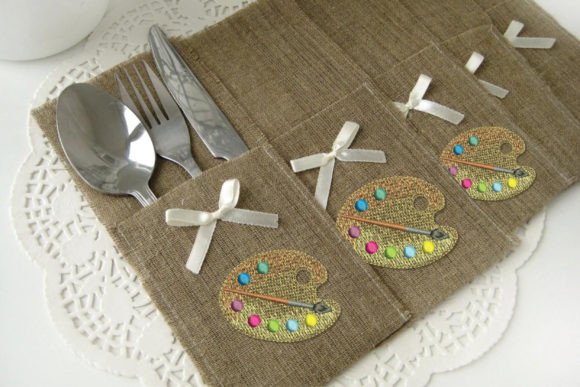
As an embroidery designer who builds holiday collections for Etsy sellers, craft fairs, and small apparel brands, my first impression of Palette with Paints for Artists is immediate and warm—it feels like stepping into a sunlit studio just before the holidays. The design carries a playful yet refined energy: not overly cartoonish, not stiffly formal—just authentically artistic. It leans into cozy nostalgia with a modern twist: soft curves in the paintbrush handles, subtle texture in the palette wood grain, and balanced negative space that invites customization. It reads as premium without sacrificing approachability—a rare win for seasonal embroidery targeting teachers, creatives, and families.
Where This Machine Embroidery Design Shines in Holiday Product Lines
Palette with Paints for Artists is unusually versatile across product categories—especially when you’re curating limited-edition holiday drops. On sweatshirt embroidery, it anchors a “teacher appreciation” line with quiet confidence; on tote bag design, it becomes a conversation starter at craft fairs or school bazaars. For kitchen towel embroidery, its clean lines hold up beautifully against linen blends, and on pillow cover projects, it adds warmth to seasonal home decor without overwhelming the fabric.
It also excels in personalized gift contexts: pair it with a monogrammed initial in a coordinating script font, or layer it subtly behind a child’s name on a baby blanket—ideal for back-to-school meets holiday gifting (a sweet overlap in the School category). As an embroidered patch, it works for DIY ornament kits or stitched-on aprons sold as handmade gift bundles. And because it’s inherently thematic—not tied to one specific holiday—it performs well year after year: think Valentine’s Day art classes, spring gallery nights, or summer camp merchandise.
Real-World Selling Scenarios That Benefit From This Design
Etsy sellers will find Palette with Paints for Artists highly convertible in listings tagged “teacher gift,” “artist mom,” or “creative family.” Its visual clarity translates well into printable mockup previews—no fuzzy edges, no lost detail at thumbnail size. On social media, it stands out in carousel posts showing “before & after” stitching on textured fabrics, especially when styled with seasonal props: pine sprigs, ceramic mugs, watercolor paper.
For craft fair displays, this machine embroidery design helps unify a booth’s aesthetic—imagine matching aprons, tote bags, and embroidered table linens all featuring the same motif. In family matching collections (think parent + child sweatshirts), it reads as intentional and cohesive—not forced. And because it avoids religious or dated cultural references, it maintains broad appeal across diverse customer bases during high-stakes holiday shopping windows.
Smart Placement Considerations for Holiday Production
This digital embroidery file rewards thoughtful execution. Avoid using it at ultra-small hoop size settings—fine brush bristles and delicate paint drip details may lose definition under 3.5 inches. On thick towels or heavy canvas, increase stabilizer layers to prevent puckering around curved edges. Dark fabric demands careful thread colors testing: what reads as vibrant on white may mute unexpectedly on navy or charcoal.
Steer clear of stretchy garments unless you use cutaway + tear-away combo stabilizer—and always test stitch density on scrap fabric first. Metallic thread can highlight the palette’s elegance but risks breakage in tight corners; reserve it for topstitching accents only. Curved caps? Possible, but best suited for simplified versions—this design shines brightest on flat, stable surfaces like pillow covers, aprons, and flat-panel ornaments.
How Palette with Paints for Artists Elevates Your Seasonal Brand
This holiday embroidery design strengthens buyer emotion by tapping into universal feelings of creativity, growth, and self-expression—key drivers during gift-giving seasons. It boosts perceived product value: customers associate hand-drawn authenticity with care and intention, making even simple items feel like meaningful handmade gifts. Visually, it supports strong brand consistency across product types—whether you're selling a single embroidered patch or a full “artist’s studio” bundle.
It also builds customer trust: its balanced composition signals professional digitizing, and its adaptability reassures buyers they’re investing in a flexible, long-term asset—not a one-season trend. Social engagement rises when shoppers recognize and tag your shop in their finished projects, especially when styled in seasonal settings (e.g., a painted mug beside an embroidered kitchen towel). That organic visibility is gold during November–December traffic surges.
Practical Notes Every Embroidery Designer Should Keep Handy
- Always test thread colors on both light and dark fabric swatches—what looks rich on screen may shift dramatically in stitch.
- Check stitch density before bulk production; dense fills can stiffen lightweight fabrics meant for baby items or scarves.
- Confirm hoop size compatibility early—some versions may require 5x7 or larger for optimal detail retention.
- Use appropriate stabilizer for fabric texture: tear-away for stable cottons, cutaway for knits or towels.
- Create realistic mockups using actual fabric photos—not just digital templates—to assess scale and balance.
- Review small details post-stitching: check brush tips, paint drips, and textural strokes for clarity and consistency.
- Plan matching color palettes across your collection—coordinate thread hues with seasonal packaging or accessory ribbons.
- Verify commercial licensing before selling finished products—this is essential for any commercial embroidery use, especially in the Embroidery category.