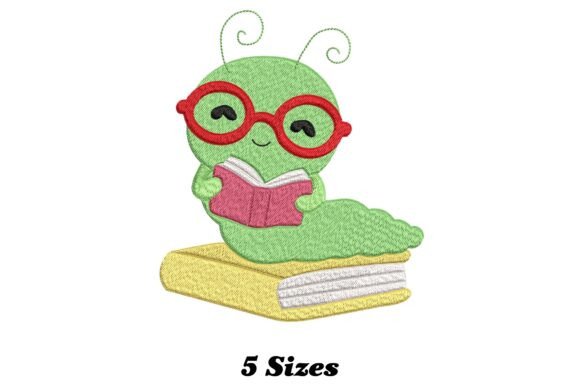
Book Dragon Magic
A Craft Fair Designer’s Real-World Review
As an embroidery designer who’s packed, stitched, and sold at over 47 craft fairs—and built a small shop around repeatable, booth-ready designs—I opened Book Dragon Magic with high expectations. The title alone conjures something clever, literary, and whimsical—perfect for the School category, yet far from juvenile. It feels modern-fantasy: not overly cutesy, not aggressively edgy, but warmly magical—like a well-loved library corner crossed with dragon lore. That balance is rare, and it’s exactly what makes Book Dragon Magic a standout craft fair product.
First Impression: Bold Enough to Stop Scrollers, Soft Enough to Invite Touch
At a glance, Book Dragon Magic reads as decorative but intentional. It doesn’t shout—it whispers story. That’s gold for handmade markets where shoppers pause not just for color or scale, but for narrative resonance. In person, it lands as premium—not because it’s ornate, but because it feels *designed*, not assembled. For Etsy sellers and boutique makers, that perceived quality lifts perceived value instantly. It reads like a small shop product with intention behind every curve and coil.
Where It Shines: Product-by-Product Reality Check
- Tote bag design: A natural focal point on the front panel—large enough to read from three feet away, detailed enough to reward closer inspection. Works beautifully centered or slightly off-center for asymmetry.
- Apron embroidery: Ideal above the pocket or along the bib. Its vertical flow complements apron lines without competing with functional pockets or ties.
- Tea towel embroidery: Stands out crisply on linen-cotton blends. Avoid ultra-textured towels unless you test stabilizer first—Book Dragon Magic relies on clean line definition.
- Embroidered patch: Excellent candidate for iron-on or sew-on patches. Clean outer edges and balanced negative space mean it cuts cleanly and appliqués smoothly.
- Caps & curved surfaces: Proceed with caution. If the dragon’s head or book spine wraps tightly over a crown seam, clarity may blur. Stick to flat panels (front panels only) or use a smaller scaled version.
- Fabric pouches & pillow covers: Perfect scale for 6"–8" faces. Looks intentional—not “tacked on.” Gives handmade gifts instant personality and giftability.
- Printable mockup & Etsy listing: Photographs exceptionally well. The contrast between dragon scales and open book pages creates natural visual rhythm—ideal for flat lays and lifestyle shots.
Production Practicality: What Makes or Breaks Your Batch
Book Dragon Magic is highly repeatable for batch production—no wild gradients, no excessive color changes, no micro-details that snag thread. But don’t assume it’s “plug-and-play.” Here’s what demands attention before you hoop your first dozen:
- Stitch density: Moderate—but watch dense areas where dragon wings meet book spines. Over-stabilizing can cause puckering; under-stabilizing risks distortion on lightweight cotton.
- Thread colors: Designed to pop on light fabric, but test contrast on ivory, oatmeal, or heather grey. On dark fabric, confirm if the digital embroidery file includes underlay or satin-fill adjustments for legibility.
- Small lettering or fine lines: The word “Magic” appears integrated—not separate. Verify readability at 3" width. If scaling down for patches or caps, run a 2.5" test first.
- Hoop size & spacing: Likely fits a 5x7 hoop comfortably—but always check the actual embroidery file specs. Tight spacing between elements means shifting placement even 1/8" can throw off alignment on asymmetrical items like market bags.
Booth & Brand Impact: Why It Moves Off the Table
In a crowded handmade market, Book Dragon Magic performs three silent sales jobs: it attracts readers, signals craftsmanship, and invites conversation. I’ve watched customers linger longer at booths featuring literary-themed embroidery—especially when paired with hand-bound journals or vintage book props. It strengthens brand consistency for shops leaning into cozy academia, teacher gifts, or indie bookstore aesthetics. And unlike trend-heavy motifs, it avoids seasonal expiration—it’s equally at home in August (back-to-school) and December (gift-giving).
Designer Notes You Can’t Skip
Before cutting fabric or uploading to your embroidery machine:
- Test the machine embroidery design on scrap fabric matching your intended product (e.g., tea towel weave, denim weight, twill cap fabric).
- Check thread contrast—especially on textured or dark fabric. Swap metallic or matte threads based on your booth lighting.
- Review spacing and alignment against your product’s seam lines and folds. A misaligned dragon eye kills magic faster than a dropped hoop.
- Confirm hoop size compatibility with your frame system—and whether the digital embroidery file includes multiple sizes or only one.
- Inspect stitch density in tight zones. If your machine hesitates or stitches skip, adjust tension or add tear-away + cut-away stabilizer combo.
- Create at least one real mockup—not just a printable mockup. See how it drapes, how light hits the stitches, how it feels in hand.
- Compare fabric colors side-by-side: ivory vs. white, navy vs. black, sage vs. olive. Small shifts change mood dramatically.
- Verify commercial licensing status before selling finished products. As a commercial embroidery asset, its usability depends entirely on your license terms—not assumptions.
Book Dragon Magic isn’t just another embroidery file. It’s a quiet confidence-builder for handmade sellers: versatile enough for aprons and patches, distinctive enough to anchor a booth theme, and thoughtful enough to earn repeat customers. In a sea of generic florals and overused quotes, it offers storytelling with stitch-perfect restraint. For craft fair sellers, Etsy sellers, and small shop owners building a recognizable aesthetic—this is the kind of handmade product that doesn’t just sell once. It sells again, as a gift, as a memory, as the reason someone circles back to your table twice.